
Dental Bridges vs. Partial Dentures: Which Is Better for Replacing Missing Teeth?
When you lose a tooth, the space left behind quickly becomes a bigger issue than just a gap in your smile. The teeth on either side can slowly start leaning into that open space, your bite can change, and simple things like chewing a steak or crunching on an apple can get frustrating.
Once you decide to fix the gap, you will almost always find yourself comparing two classic solutions: a dental bridge and a partial denture. Both have been helping people chew comfortably for decades, but they handle the job in completely different ways.
If you are trying to figure out which direction to go with the team at SmileCare Dental of Woodbridge, looking at how these two options actually fit into daily life makes the decision a whole lot easier.
The Basic Difference Comes Down to One Thing
The easiest way to understand the difference is simple: a bridge stays fixed in your mouth, while a partial denture is something you can take out, often including before going to sleep.
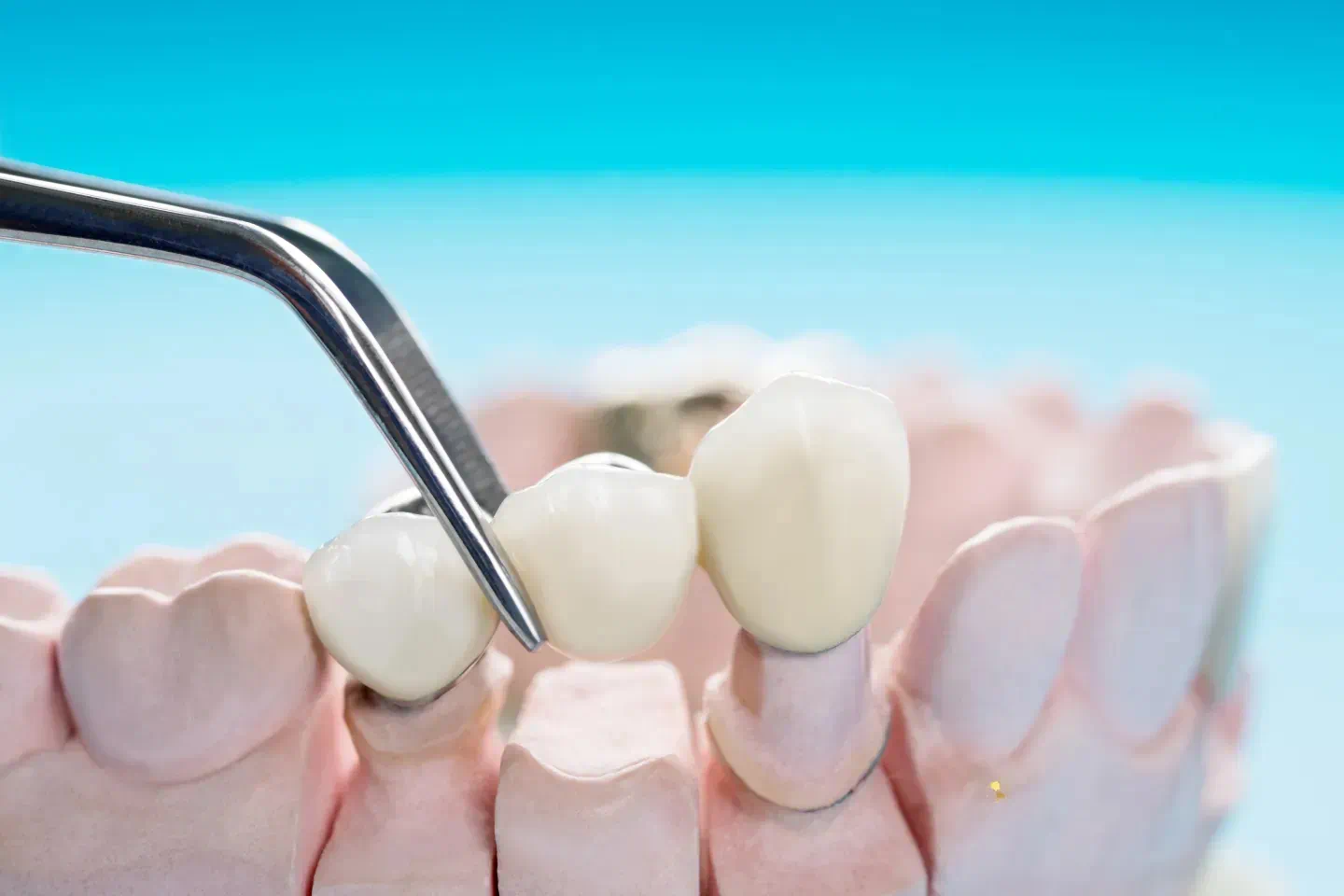
A dental bridge is custom-made to replace one or two missing teeth in a single row. To put one in, your dentist shapes the natural teeth on both sides of the gap so they can support the crowns that hold the replacement tooth. These outer crowns support a realistic false tooth right in the middle, securing the whole piece in place with dental cement. Once it is in, it can feel like part of your natural mouth. You brush it, floss under it, and basically forget it is not an original tooth.
A partial denture works more like a removable appliance. It uses a plastic or metal framework that holds a few replacement teeth attached to a pink base that looks like your gums. Small metal or clear clasps hook onto your surrounding teeth to help keep the piece stable while you eat and talk. Because it is not cemented down, you can remove it for cleaning and follow your dentist's instructions for overnight storage.
How They Feel and Function Day to Day
When it comes to comfort and chewing, a bridge can provide a stable option because it is supported by the surrounding teeth. It generally does not move the way a removable appliance can when you bite down on foods. You can chew naturally without worrying as much about the restoration shifting around.
Partial dentures have come a long way in terms of comfort, but because they rest directly on your gums and rely on clasps, you might feel a tiny bit of movement when eating sticky or very hard foods. It takes a little time for your mouth and tongue to adjust to having a removable framework sitting along the roof of your mouth or under your tongue.
On the flip side, getting a bridge requires your dentist to trim down a layer of enamel on the healthy neighboring teeth to anchor those holding crowns. If those adjacent teeth are already in perfect shape with no fillings, you might hesitate to modify them. Depending on the design, a partial denture may be able to use existing teeth for support without the same type of reshaping required for a traditional bridge.
Cleaning and Daily Maintenance
Maintenance is another area where your daily routine changes depending on what you pick.
With a dental bridge, you brush your teeth normally. The only difference is that since you cannot slide floss straight down between connected crowns, you use a small tool called a floss threader or a water flosser to clean the small space underneath the false tooth. Keeping that area clean helps keep your gums healthy and protects the supporting teeth underneath.
With a partial denture, your routine involves taking the appliance out regularly for cleaning. You brush the partial gently with a soft brush and non-abrasive cleanser, then place it in a glass of water or denture solution overnight as directed by your dentist. Taking it out at night allows your gum tissue to rest and can help keep your mouth fresh.
Comparing the Costs and Longevity
Budget almost always plays a role when picking dental restorations.
Partial dentures are generally the more affordable option upfront. If you are missing several teeth scattered across different parts of your mouth, a single partial can replace all of them at a lower initial cost than placing multiple fixed bridges.
However, bridges may last longer in some situations. A well-maintained bridge can last many years, sometimes ten years or more. Partial dentures can also last for several years, although your gums and jawbone naturally change shape over time, which can eventually cause a removable partial to loosen up and need a reline or replacement.
Which Option Fits Your Dental Needs?
There is no single right answer here because every mouth is shaped differently:
A bridge may be considered if you are missing just one or two teeth in a row, want a fixed restoration, and prefer a solution that is supported by the surrounding teeth.
A partial denture may be considered if you need to replace multiple teeth across different spots in your mouth, prefer a removable treatment, or want a lower upfront-cost option.
Talking things through with an experienced team at SmileCare Dental of Woodbridge in Woodbridge, VA helps you weigh your options against your health goals so you can move forward with a clear understanding of your choices.
Get Back to a Complete Smile
Living with empty spaces in your mouth does not have to be your long-term reality. Replacing missing teeth can help restore your bite and make eating more comfortable.
At SmileCare Dental of Woodbridge, we help patients across Woodbridge, VA explore their tooth replacement options with clear, straightforward advice.
Give our office a call today to schedule a visit and see which option fits your lifestyle best.
Frequently Asked Questions
Q: How long does it take to get a bridge versus a partial denture?
A: A bridge may take about two to three weeks over two main appointments, depending on the case and laboratory turnaround time. Partial dentures often require several visits so your dentist can take detailed measurements and check the fit before finalizing it.
Q: Can a partial denture be converted into a bridge later on?
A: You cannot transform a partial denture into a bridge directly, but you can start with a partial denture now and later discuss a fixed bridge or dental implants if your oral health and treatment needs make them appropriate.
Q: Will a bridge or partial denture affect how I talk?
A: You might notice a slight change in speech as your tongue adjusts to a new restoration, particularly with a partial denture. Speech often becomes more comfortable as your mouth adapts, although the adjustment period varies from person to person.
Q: Are bridges and partials covered by dental insurance?
A: Coverage for bridges and partial dentures varies by dental insurance plan and the specific treatment. Our office team can check your specific plan to help you understand what your out-of-pocket costs may look like.


Office Hours
Monday - Thursday: 7:00 am - 4:00 pm
Friday - Sunday: Closed


© 2026 SmileCare Dental of Woodbridge | All Rights Reserved | Privacy Policy | Digital Marketing by Remedo